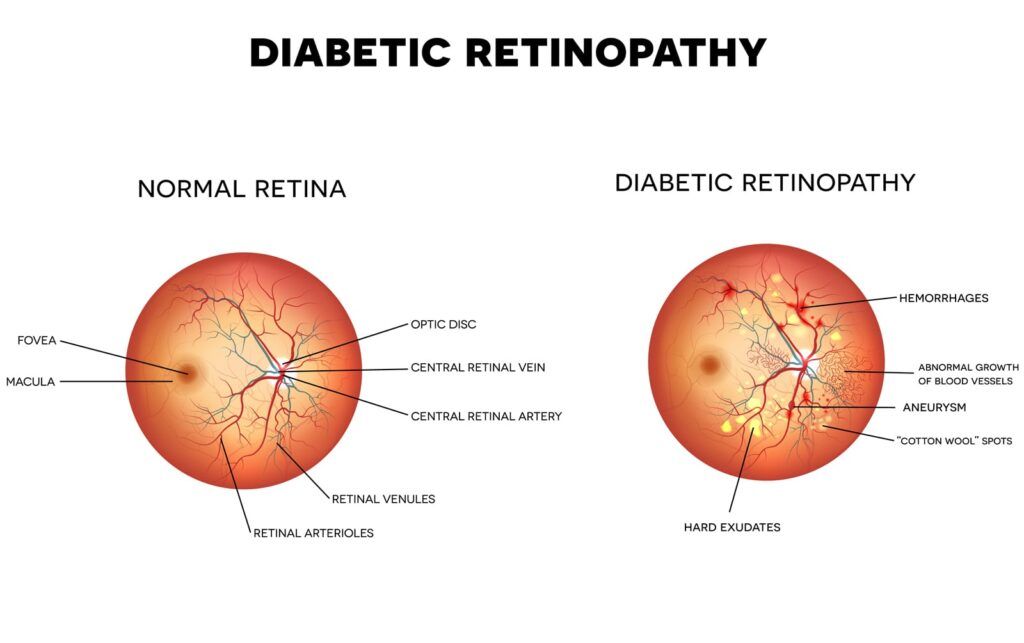
Diabetes affects the small blood vessels throughout the body—including those in the eyes. When blood sugar levels are not well controlled over time, these blood vessels can become damaged, particularly in the retina, the light-sensitive tissue at the back of the eye responsible for vision.
This condition is known as diabetic retinopathy, one of the leading causes of vision loss in adults.
Damaged retinal blood vessels may begin to leak fluid or blood, causing swelling and blurred vision. In some cases, the blood supply to the retina becomes insufficient, leading the eye to grow abnormal new blood vessels. These fragile vessels can bleed or form scar tissue, which can threaten vision if left untreated.
Types of Diabetic Retinopathy
There are two main stages of diabetic retinopathy:
Non-proliferative diabetic retinopathy (NPDR)
This is the most common and earliest stage. Small retinal blood vessels weaken and may leak fluid or small amounts of blood. In some cases, swelling can occur in the central retina (macula), which is known as diabetic macular edema.
Proliferative diabetic retinopathy (PDR)
This more advanced stage occurs when abnormal new blood vessels grow on the retina. These vessels are fragile and can bleed into the eye or create scar tissue, which may lead to severe vision loss if not treated.
Good control of blood sugar, blood pressure, and cholesterol can significantly reduce the risk of developing diabetic retinopathy or slow its progression.
Diabetic Eye Exams at Complete Eye Care
Regular eye examinations are essential for anyone with diabetes—even if vision seems normal. Diabetic eye disease can develop without noticeable symptoms in its early stages, which is why routine screening is so important.
At Complete Eye Care, our doctors perform a thorough evaluation of the retina to detect early signs of diabetic eye disease and monitor for changes over time.
Your exam may include:
Dilated retinal examination
Drops are used to widen the pupils so the doctor can carefully examine the retina and optic nerve.
Fundus photography
High-resolution photographs of the retina allow us to document the health of the blood vessels and monitor subtle changes over time.
Optical Coherence Tomography (OCT)
OCT is a non-invasive imaging test that provides detailed cross-sectional images of the retina. This technology allows us to detect even small amounts of swelling or fluid in the macula, helping identify diabetic macular edema early.
These advanced imaging tools help ensure that diabetic retinopathy and diabetic macular edema are detected as early as possible, when treatment is most effective.
How Often Should Diabetic Patients Be Screened?
Most patients with diabetes should have a comprehensive dilated eye exam once per year. In some cases, more frequent monitoring may be recommended depending on the health of the retina.
Even if your vision seems normal, regular screenings are critical for protecting long-term eye health.
Protecting Your Vision
In addition to routine eye exams, the best ways to protect your vision include:
- Maintaining good blood sugar control
- Managing blood pressure and cholesterol
- Following your physician’s diabetes treatment plan
- Scheduling regular diabetic eye screenings
Early detection and treatment of diabetic eye disease can help preserve vision and prevent serious complications.