

St. Louis Premier Cataracts Provider
A cataract is the gradual clouding of the eye’s natural lens. As the lens becomes less clear, light entering the eye becomes scattered, causing vision to appear blurry, hazy, or dim. Cataracts most commonly develop as part of the natural aging process, but they can also occur earlier in life.
While cataracts are not dangerous to the health of the eye, they can significantly interfere with everyday activities such as reading, driving, cooking, or watching television. Cataracts typically develop slowly over time, and many people first notice subtle changes in their vision before symptoms become more pronounced.
Common symptoms of cataracts include:
- Blurred or cloudy vision
- Difficulty seeing at night
- Sensitivity to light or glare
- Halos around lights
- Colors appearing faded or yellowed
- Frequent changes in glasses prescriptionz
In the early stages, cataract symptoms can often be managed with updated glasses or brighter lighting. As the cataract progresses, however, surgery may be recommended to restore clearer vision.
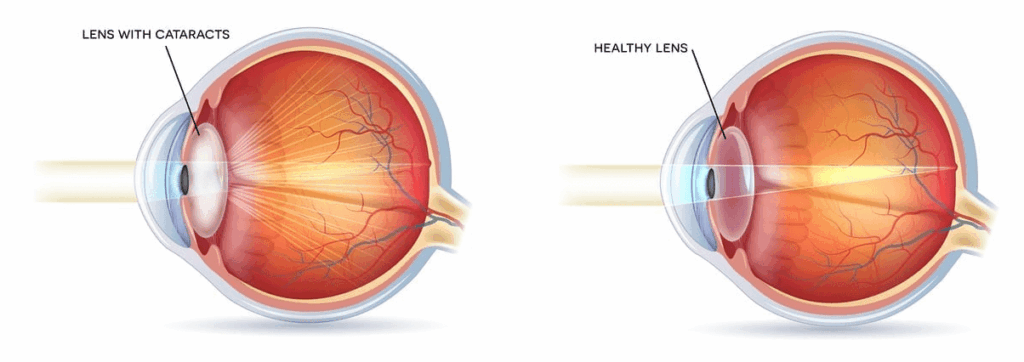
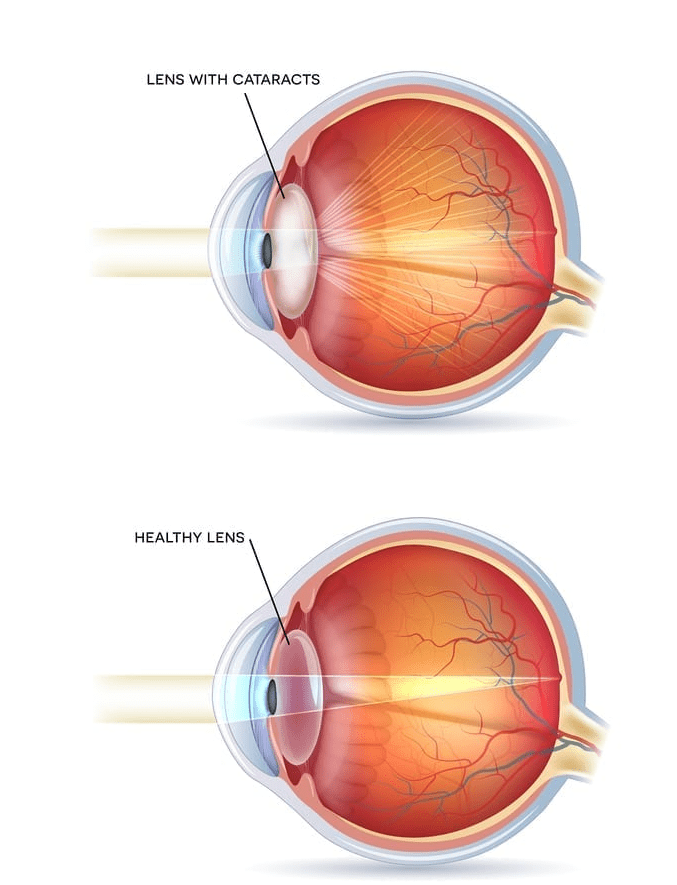
Did you know...
More than half of Americans age 80 or older either have a cataract or have had cataract surgery. Although cataracts are most common with aging, they can also occur in patients in their 40s and 50s. Protecting your eyes from ultraviolet light and maintaining a healthy diet rich in leafy greens and antioxidants may help support long-term eye health.
Cataract Surgery
Cataract surgery is one of the most common and successful procedures performed in medicine today. During surgery, the cloudy natural lens is gently removed and replaced with a clear intraocular lens (IOL) that restores vision.
The procedure is typically performed on an outpatient basis and usually takes less than 20 minutes. Most patients return home the same day and notice improved vision soon afterward.
Today’s cataract surgery also provides the opportunity to improve how you see after surgery through advanced lens implant technology.
Lens Implant Options
There are several types of intraocular lenses available, depending on your vision goals and lifestyle.
Monofocal lenses
Provide excellent distance vision but typically require glasses for reading.
Toric lenses
Designed to correct astigmatism and reduce dependence on glasses for distance vision.
Multifocal and extended depth-of-focus lenses
Allow many patients to see both near and far with reduced reliance on glasses.
Light Adjustable Lens (LAL)
One of the most advanced technologies available today. The Light Adjustable Lens allows your surgeon to customize your vision after surgery using special light treatments. This means your prescription can be fine-tuned once the eye has healed, offering an added level of precision and personalization.
Your doctor will help determine which lens option best fits your visual needs and lifestyle.
Frequently Asked Questions
When should I see an eye doctor about cataracts?
Regular comprehensive eye exams are the best way to monitor cataracts. However, you should schedule an evaluation sooner if you notice changes such as blurred vision, glare, or difficulty seeing at night.
For adults over age 60, a comprehensive dilated eye exam every one to two years is generally recommended.
What should I expect during cataract surgery?
Cataract surgery is a safe and routine procedure performed every day across the United States. The eye is numbed using anesthetic drops, and mild sedation is often provided to help you relax.
During the procedure, the cloudy lens is removed and replaced with a clear artificial lens implant. If both eyes require surgery, they are treated on separate days.
Because the procedure is outpatient, most patients return home the same day.
What happens after surgery?
Cataract surgery is successful in more than 95–98% of cases. After surgery, patients typically use prescribed eye drops for several weeks to support healing.
You may experience mild irritation or light sensitivity for a short period. Most people resume normal daily activities within a few days, although heavy lifting and strenuous activity should be avoided until your doctor clears you.
Follow-up visits allow your doctor to monitor healing and ensure your vision is improving as expected.
When should cataract surgery be performed?
Cataract surgery is recommended when vision changes begin interfering with everyday activities such as driving, reading, or hobbies. There is no need to wait for a cataract to become “ripe.” Modern cataract surgery can safely restore vision once symptoms begin affecting quality of life.